
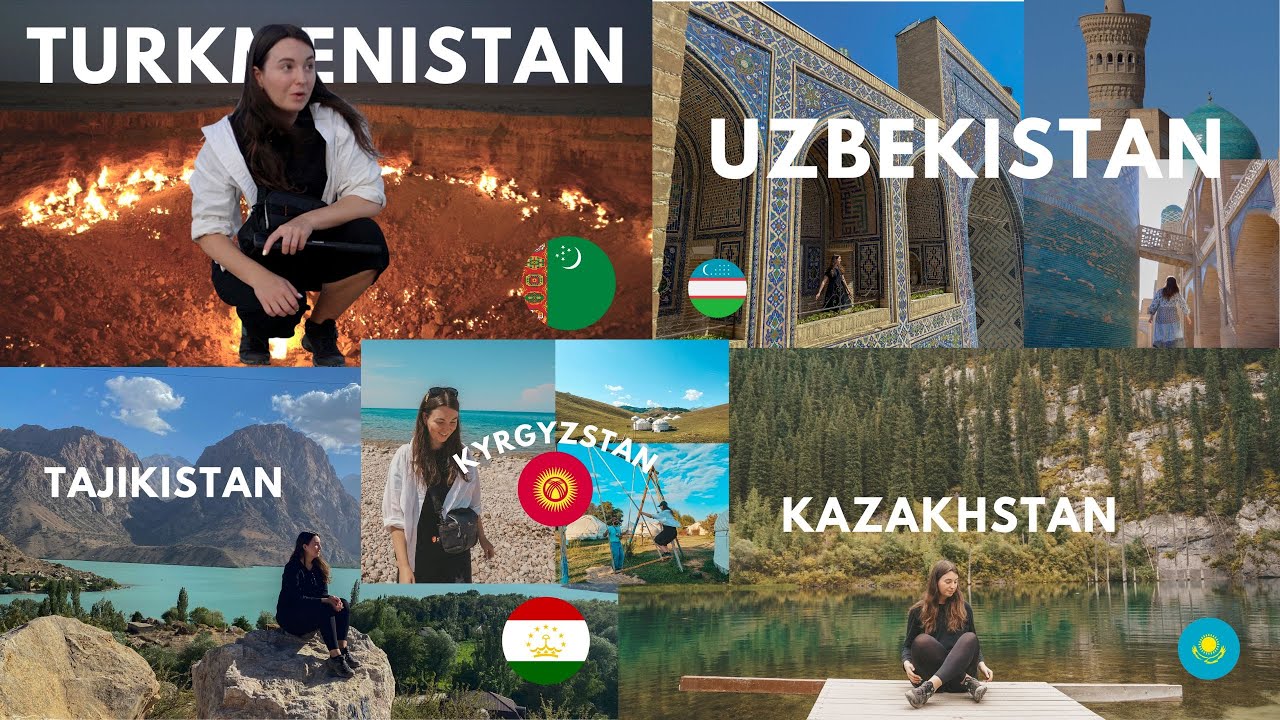
Central Asia rarely tops bucket lists, yet it quietly delivers one of the most rewarding travel experiences on the planet. And traveling the region known as the “Five Stans” — Turkmenistan, Uzbekistan, Tajikistan, Kazakhstan, and Kyrgyzstan — stretches across ancient Silk Road territory, blending surreal cities, mountain landscapes, nomadic traditions, and deep-rooted hospitality.
While these countries share history, traveling through them reveals striking contrasts. From marble-white capitals to alpine lakes and desert craters, here’s what first-time travelers should know before planning a journey across the Five Stans.
Turkmenistan: The Most Enigmatic Stop
Turkmenistan is often described as the most closed-off country in Central Asia, and that reputation is largely accurate. Independent travel is extremely limited, and most visitors enter on an organized group tour, which also handles visa processing.
Once inside, the experience feels unlike anywhere else. Ashgabat, the capital, is famously known as the White City — a Guinness World Record holder for its concentration of marble buildings. White cars glide past grand monuments, creating an atmosphere that feels almost cinematic.
Outside the city, the Darvaza Gas Crater, also called the Door to Hell, is one of Central Asia’s most unforgettable sights. This burning crater has been alight for decades and remains a must-see — especially as there have been ongoing discussions about extinguishing it.
Turkmenistan is predominantly desert, hot year-round, and culturally conservative. Modest dress is expected at mosques, and most meals are meat-heavy. The local currency is the Turkmen manat, but US dollars are widely used for exchange inside the country.
Accommodation is usually pre-arranged through tours, ranging from grand hotels in Ashgabat to traditional yurt camps near the crater.
Uzbekistan: Silk Road Cities Done Right
Uzbekistan is often the easiest entry point into Central Asia — and for many travelers, the most visually iconic. Visa-free or visa-on-arrival access makes it straightforward, and border crossings within the region are generally smooth.
Cities like Khiva, Bukhara, Samarkand, and Tashkent are packed with mosques, madrasas, minarets, and bustling bazaars. While Samarkand impresses with scale, many travelers find Khiva and Bukhara more intimate and atmospheric due to fewer crowds.
Uzbek architecture is famous for its turquoise-tiled domes, glowing especially beautifully at night when historic buildings are illuminated. Summer evenings often feature light shows, adding a magical feel to already dramatic cityscapes.
Getting around is easy thanks to a reliable train network connecting major cities. The local currency is the Uzbek som, and US dollars are easily exchanged.
Food is central to Uzbek culture. Meat eaters will encounter plov everywhere — the region’s signature rice dish — with each city claiming to prepare it best.
Tajikistan: Mountains, Lakes, and Raw Beauty
Tajikistan feels like a secret waiting to be discovered. Less visited than its neighbors, it rewards travelers with rugged landscapes and authentic village life.
Roughly 90% of Tajikistan is mountainous, and the shift in scenery is immediate. Highlights include the alpine Iskanderkul Lake, surrounded by dramatic peaks, waterfalls, and hiking trails. Homestays in remote villages offer some of the most meaningful cultural experiences in the region.
Reaching these areas can be intense. Roads pass through narrow mountain tunnels — including the infamous Anzob Tunnel, often cited as one of the world’s most dangerous due to lack of lighting and ventilation.
The capital, Dushanbe, is calmer and less touristy, known for its massive flagpole and relaxed pace. Tajik cuisine features lighter options too, including qurutob, a comforting dish made with yogurt, flatbread, and vegetables.
The currency here is the somoni, and some nationalities require an e-visa, so it’s worth checking requirements in advance.
Kazakhstan: Vast Landscapes and Natural Wonders
Kazakhstan is enormous — and most travelers barely scratch the surface. Many trips begin in Almaty, a leafy, walkable city framed by snow-capped mountains.
From Almaty, day trips reveal dramatic diversity. Charyn Canyon, often called the mini Grand Canyon, showcases striking rock formations, while the Singing Dune offers one of the strangest natural phenomena in the region — sand that hums when disturbed.
Mountain lakes like Kolsai and Kaindy add a lush contrast, surrounded by forests rather than the barren peaks seen elsewhere in Central Asia.
Kazakhstan is generally visa-free for many travelers, uses the tenge, and is relatively easy to navigate. Russian is widely spoken, which can be helpful throughout the region.
Local specialties include kumis (fermented mare’s milk), kurt (dried cheese balls), dumplings called manty, and the national dish beshbarmak, often made with horse meat.
Kyrgyzstan: Nomadic Traditions and Alpine Escapes
Kyrgyzstan is the most outdoors-focused of the Five Stans and a favorite for hikers and nature lovers. Entry is usually visa-free, and the local currency is the som.
Life here still carries traces of nomadic culture. Around Issyk-Kul Lake — the world’s second-largest high-altitude lake — travelers can swim, hike, stay in yurts, and explore colorful landscapes like Fairy Tale Canyon and Seven Bulls Rock.
Kyrgyz yurts differ from Mongolian ones, featuring felt exteriors rather than synthetic coverings. The country is also known for felt-making traditions and eagle hunting demonstrations that are still practiced today.
The capital, Bishkek, is relaxed and functional, serving as a gateway to the country’s wild interior rather than a highlight itself.
Things to Know Before You Go
- Most Five Stans are Muslim-majority countries; modest dress is appreciated, especially in religious sites.
- Land border crossings are generally straightforward.
- US dollars are widely accepted for currency exchange.
- Russian is commonly spoken across the region.
- Meat-heavy diets are common, though vegetarian options exist with planning.
- Each country feels distinct — don’t assume one experience represents them all.
Traveling through the Five Stans isn’t just a trip — it’s a deep dive into landscapes and cultures that still feel untouched by mass tourism. For first-time travelers willing to step off the usual trail, Central Asia offers an unforgettable journey across history, mountains, and living traditions.
Still looking for to travel around nearby Europe? Here is some interesting advice you want to check out.
Check on YouTube